Into konbini life—and MORE, MORE Japan.
Launching October 2026

A limited 30-gram bag hits 7-Eleven stores first on Sept. 28, before the new House Foods snack rolls out nationwide in October.
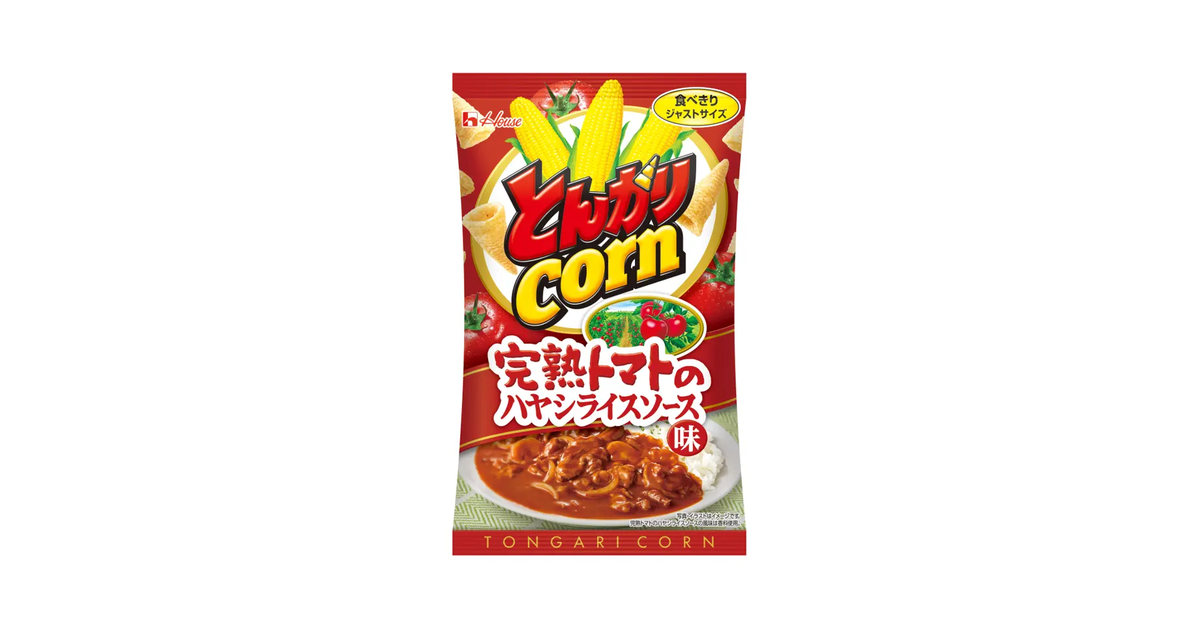
House Foods is bringing two of its own long-running Japanese favorites together with a new Tongari Corn flavored after its Kanjuku Tomato Hayashi Rice Sauce.
The new snack celebrates the 30th anniversary of Kanjuku Tomato Hayashi Rice Sauce, a roux product launched by House Foods in 1996. It combines Tongari Corn’s toasted corn flavor and light crunch with the rich tomato flavor, sweetness and a pleasant tang associated with the sauce.
A 30-gram bag will be released first in limited quantities at 7-Eleven stores across Japan on Sept. 28, with a reference price of ¥128 before tax. A larger 62-gram version will follow nationwide on Oct. 12, priced at around ¥198 before tax.

Tongari Corn is a cone-shaped corn snack made by House Foods and sold in Japan since 1978. Its hollow, pointed shape is its signature feature, and generations of Japanese kids have also discovered that the cones fit neatly over their fingertips.
The snack was developed through a technical partnership with U.S. food company General Mills, adapting its cone-shaped Bugles snack for Japan. Tongari refers to its distinctive pointed shape.
Over the years, House Foods has released dozens of different flavors. Its two long-running staples today are Assari Shio, a lightly salted flavor, and Yaki Tomorokoshi, inspired by grilled corn with a savory roasted flavor.
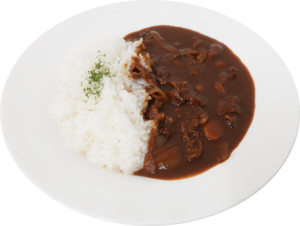
Hayashi rice is a Japanese yoshoku dish — Western-influenced cooking adapted in Japan — usually made with thinly sliced beef and onions in a rich brown sauce and served over white rice. The familiar classic style is associated with a demi-glace-based sauce, giving it a deep, savory flavor.
Its exact origins are unclear, and several competing stories exist. One theory connects hayashi rice with hashed beef: the name hayashi may have developed from the Japanese pronunciation of “hashed beef,” a Western-style beef dish that became known in Japan during the country’s early adoption of Western cooking. Other origin stories link the name to people surnamed Hayashi or similar names.
As a finished dish, hayashi rice also has some similarities to beef stroganoff, although stroganoff is not generally part of the theories about how hayashi rice originated. Both combine beef and onions with a rich Western-style sauce. Beef stroganoff is typically pale or creamy in color because of the sour cream used in the sauce, although brown versions are also common. Hayashi rice, by contrast, is generally brown, is served over rice, and traditionally leans toward a demi-glace-style sauce.
Tomato-forward hayashi is a comparatively newer style. When House Foods introduced Kanjuku Tomato Hayashi Rice Sauce in 1996, demi-glace-based hayashi sauces still dominated the market. House Foods says the product helped establish tomato-based hayashi as a distinct category in Japan, using ripe tomatoes to bring more sweetness, umami and a pleasant tang to the dish.