Into konbini life—and MORE, MORE Japan.
Launching October 2026

As Japan’s winter comfort food returns to convenience-store counters, get acquainted with oden through an almost too-detailed guide.
7-Eleven Japan will offer 10 percent off all oden(おでん)items sold at its checkout counters from Friday, October 16, through Tuesday, October 20, 2026. The five-day nationwide promotion applies to standard pretax prices. Availability varies by store.
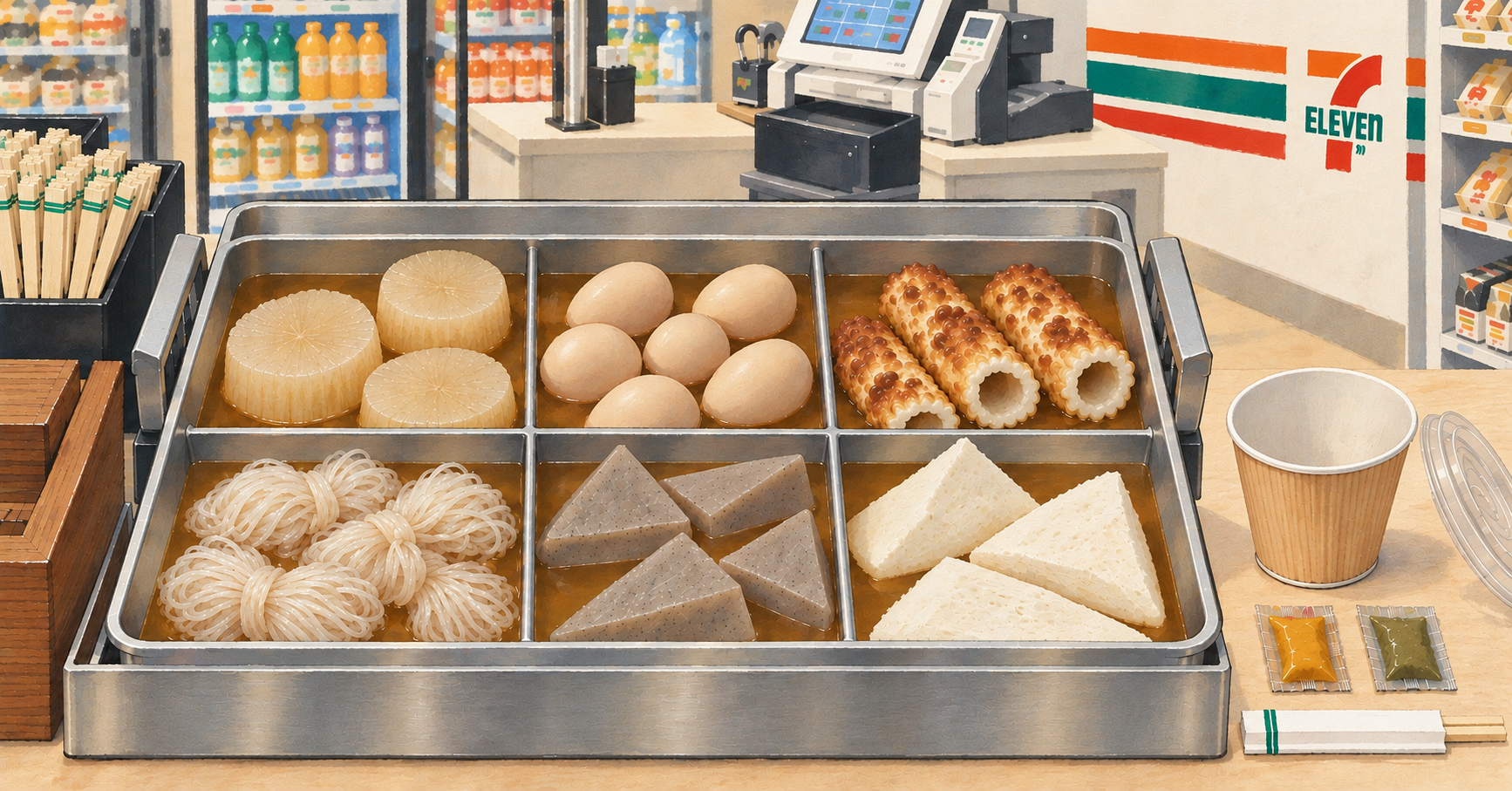
You may have seen the pot beside the register: rectangular, divided into compartments, holding pale discs, browned tubes and tidy tangles of white noodles. It can look like a small collection of edible mysteries. Everything is simmering in savory broth. Everything is waiting to be picked.
In Japan, cooler weather brings out the coats and the oden. Both are familiar comforts, brought back into service when the evenings turn cold.
Families gather around a pot at home. Some izakaya put oden on the winter menu; specialist restaurants keep it going year-round.
For many Japanese shoppers, convenience-store oden fits into the small gaps of everyday life: a few pieces to fill out a bento, satisfy a midnight craving or accompany a drink at home. It can also be an unplanned purchase late at night, on the way home after a few drinks. You step into the konbini, spot the simmering pot and suddenly find yourself ordering daikon and an egg.
The individual items are called oden-dane, or simply tane when everyone knows what is being discussed. Choose them one at a time. Your bowl can be a collection of old favorites or a modest experiment.
Here are five staples worth knowing.
The thick, pale round
Daikon is a long, white radish with a considerable second act. Raw, it is crisp and sometimes peppery. In oden, it turns tender and mild, taking in the broth until vegetable and stock become difficult to separate.
A good piece gives way to chopsticks without falling apart. Some oden enthusiasts use it to judge an entire izakaya or oden shop: the tenderness, the depth of seasoning, the flavor of the broth it holds. There is a lot riding on that unassuming round.
The Japanese expression shimi-shimi captures the appeal: thoroughly, satisfyingly soaked. Order daikon when you want to understand the pot.

At 7-Eleven: Flavor-Soaked Daikon(味しみ大根)
Standard price: ¥121 before tax; ¥130.68 including tax
Seasonally selected Japanese-grown radishes receive cross-shaped cuts and a narrow central hole to help broth penetrate.
The whole boiled egg
The oden egg is generally hard-boiled: a firm white around a fully set yolk. Split it open and let a little broth reach the center. The yolk becomes a small, rich counterpoint to the lighter stock.
At home, eggs can require diplomacy. Siblings may compete for them; parents may impose a one-egg-each rule. Around a shared pot, fairness has its limits.
At a convenience store, you can order a second or third without a family debate. Eggs are a crowd favorite, so they may already be sold out.

At 7-Eleven: Flavor-Soaked Egg(味しみたまご)
Standard price: ¥139 before tax; ¥150.12 including tax
Dedicated eggs, with attention to the hens’ feed, are cooked for springy whites and a clean finish.
The bundle of translucent white noodles
Shirataki are slender konjac noodles, usually gathered into bundles for oden. They are slippery, lightly springy and almost neutral in flavor. The broth does much of the talking.
Their appeal is textural. Between a substantial egg and a yielding piece of daikon, a tangle of fine strands gives the bowl a different rhythm. Lift a bundle, let it drip for a moment and take a bite.
Do not expect the softness of wheat noodles or the texture of rice noodles. Shirataki have their own bounce.
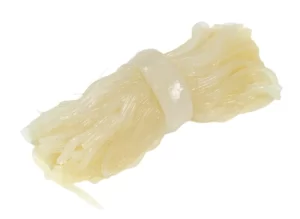
At 7-Eleven: Flavor-Soaked Shirataki(味しみ白滝)
Standard price: ¥112 before tax; ¥120.96 including tax
Three bundles are combined to increase surface area, helping the noodles carry more broth.
The browned tube with a hole through the middle
Chikuwa is seasoned fish paste formed into a tube. Yaki means grilled or roasted, which explains the browned exterior. Inside, it is mild and pleasantly elastic.
Fish cakes help give oden its character, contributing flavor to the stock while keeping their own distinctive bite. Chikuwa is an approachable introduction: savory, springy and easy to recognize.
The hollow center can hold hot broth. Keep that in mind before taking an enthusiastic first bite.
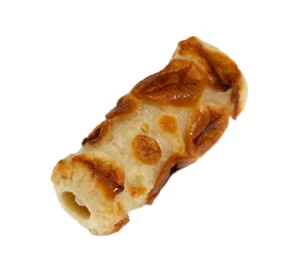
At 7-Eleven: Specially Made Grilled Chikuwa(こだわり焼きちくわ)
Standard price: ¥135 before tax; ¥145.80 including tax
Stone-ground fish paste incorporates air for a supple texture that carries the broth.
The firm, usually gray piece
Konnyaku is made from the konjac plant’s underground corm, processed into a firm, gel-like food. In oden, it is often cut into triangles. Shirataki belongs to the same family, in noodle form.
The flavor is quiet. The texture makes itself known: resilient, chewy, with a bounce that may be unfamiliar on the first encounter.
Where daikon gives way, konnyaku pushes back. That contrast earns it a place in the bowl. A good selection of oden gives your chopsticks—and your teeth—something different to do with each piece.
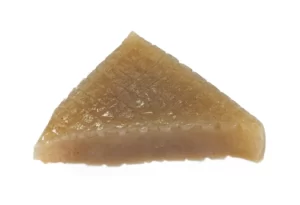
At 7-Eleven: Flavor-Soaked Konnyaku(味しみこんにゃく)
Standard price: ¥121 before tax; ¥130.68 including tax
Surface cuts help seasoning reach inside while preserving its chewy bite.
Prices are standard prices before the promotion. Products, specifications and prices may vary by region or store.
The broth holding everything together
Oden begins with broth, commonly made from dashi using kombu kelp and dried bonito, then seasoned with ingredients such as soy sauce. The pieces in the pot contribute their own flavors as they simmer.
What reaches your bowl is the result of that exchange. Daikon holds the broth deep inside. Shirataki carries it between its strands. Fish cakes add to it, then bring some back with each bite.
At 7-Eleven: The 2026 base adds eso, or lizardfish. Regional stocks give it a local accent.
| Region | Regional stock ingredients | Flavor and appearance |
|---|---|---|
| Hokkaido | Dried small fish; soda bonito flakes | Sweetness and kombu umami; slightly paler broth |
| Tohoku and Shinetsu | Roasted dried sardines, dried sardines, sardine flakes and kombu | Layered sardine flavor; standard color |
| Tokyo metropolitan area | Ma-kombu kelp; soda bonito flakes | Bonito and kombu flavors; standard color |
| Tokai | Dried mackerel scad flakes; beef | Fish richness and beef umami; standard color |
| Kansai and Hokuriku | Ma-kombu kelp, beef tendon and chicken | Kombu and meaty richness; sweet and savory |
| Chugoku and Shikoku | Dried small fish, beef and chicken | Meaty umami; pronounced sweetness |
| Kyushu and Okinawa | Flying fish, shiitake mushrooms, beef tendon and chicken | Fish, mushroom and meat umami; sweet and savory |
You can order the same pieces in different parts of Japan and still get a different bowl.
No vocabulary test is required. Point to the piece you want and say:
“Kore o hitotsu kudasai.”
これを一つください。
“One of this, please.”
For broth:
“Tsuyu mo onegaishimasu.”
つゆもお願いします。
“Some broth too, please.”
One last thing before you leave: a tiny packet of condiment. Karashi mustard is the classic. Miso sauce and yuzu kosho bring other possibilities, depending on the store and region.
The sharp yellow mustard paste
Neri refers to mustard mixed into a paste. This familiar yellow accompaniment delivers a quick, nose-clearing heat, giving mild eggs, daikon and fish cakes a sharper edge.
Tear open the packet and put a little mustard on the side of your bowl. Dab it onto a piece just before eating. Start small; the packet is tiny, but the mustard makes itself felt.
The rich, savory sauce
Miso for oden is often a seasoned sauce, sometimes sweetened. Its fermented soybean flavor adds depth; the sweetness, when present, rounds out the salt.
Try it on daikon or konnyaku. The sauce clings to the surface, adding a rich layer to each bite. Recipes differ, so expect some variation in sweetness and intensity.
The citrus-and-chili paste
Yuzu kosho is a Japanese condiment made by grinding green chili peppers with yuzu peel and salt. Yuzu is an aromatic Japanese citrus; its peel gives the paste a bright fragrance and a hint of bitterness. Unripe green yuzu is typically used, giving the condiment its distinctive green color.
Despite the name—kosho usually means pepper—there is no black pepper involved. In parts of Kyushu, where the condiment originated, kosho also refers to chili peppers. The result is a concentrated paste: fragrant, salty and hot, with a little going a long way.
The citrus aroma arrives first, followed by a salty, persistent kick. Dab a little onto a piece, or stir a tiny amount into a spoonful of broth before committing it to the bowl.
A small packet can take the same piece of daikon in an entirely different direction.
There is plenty more in the pot: hanpen(はんぺん), a fluffy fish cake; chikuwabu(ちくわぶ), a chewy tube made from wheat flour; and wiener-maki(ウィンナー巻), a sausage wrapped in fish paste, among other familiar favorites. Exploring oden-dane may be a way into Japan’s everyday food culture. There is plenty left to discover.