Into konbini life—and MORE, MORE Japan.
Launching October 2026

Seven food brands from Taiwan and Thailand will make their Japanese debuts at TABISIA, a new airport complex scheduled to open around summer 2027.
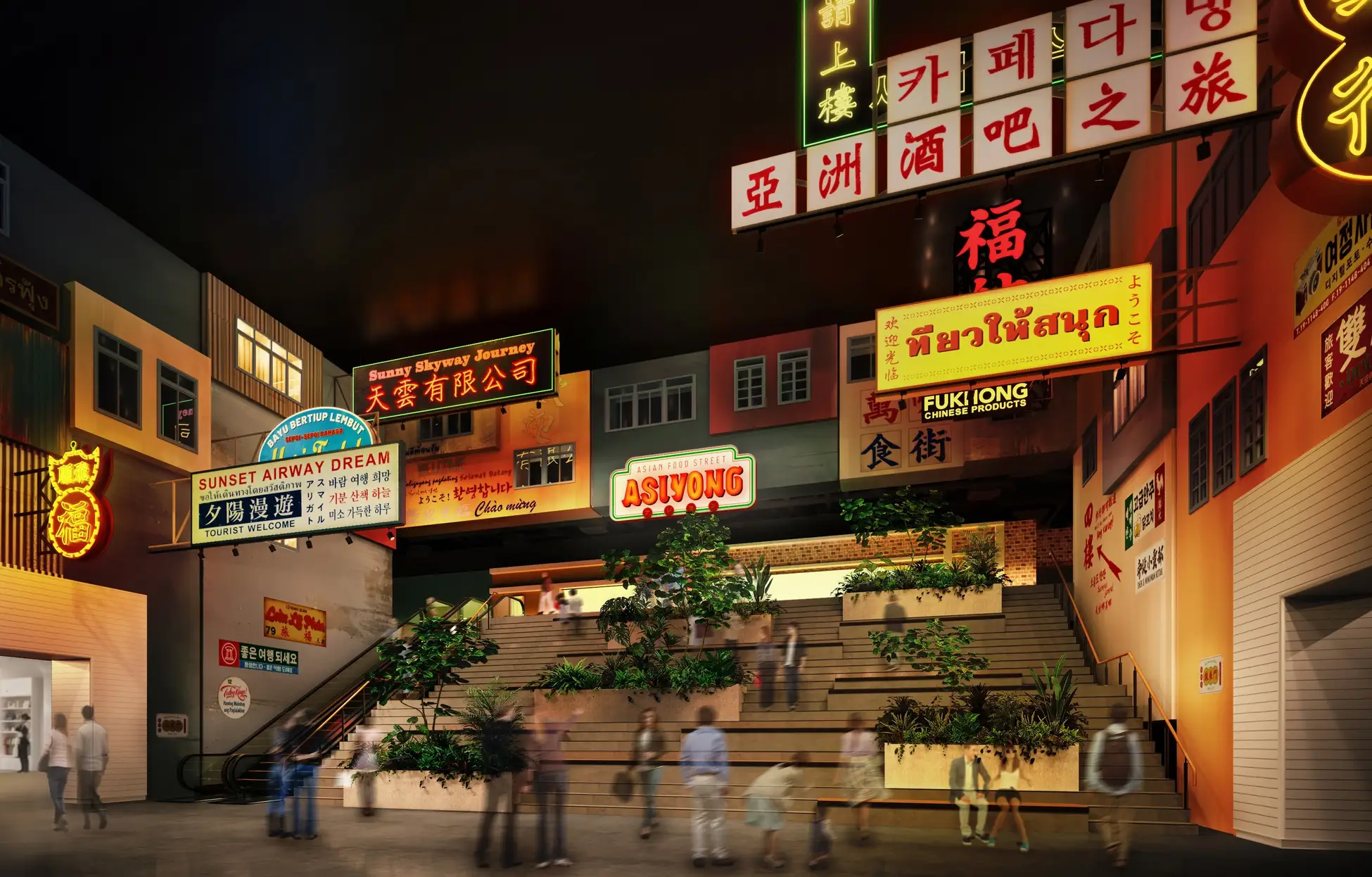
For travelers who get to know a place through what people eat, a convenience store can be an early stop. An unfamiliar snack or a small dessert offers something to investigate. The curiosity that draws someone into a konbini in Japan, or a convenience store elsewhere in Asia, travels easily to a night market or a neighborhood noodle shop.


At Fukuoka Airport, that appetite will soon have more room. On October 27, 2026, the airport’s operator announced plans for seven Taiwanese and Thai food brands to make their Japanese debuts at TABISIA(タビジア), a complex connected directly to the domestic terminal and scheduled to open around summer 2027.
They will join ASIYONG(アジヨン), a fourth-floor Asian food area planned to accommodate 44 establishments and approximately 700 seats across 7,200 square meters. Its lineup will span Japan, South Korea, Singapore, Thailand, Taiwan, China, Vietnam and Hong Kong.
Five of the announced newcomers come from Taiwan, beginning with two businesses built around the particular pleasures of a bowl.
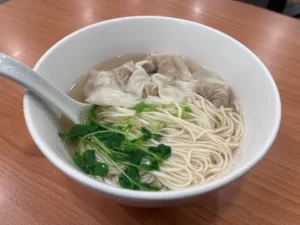
Qifu Bianshi(奇福扁食), established in 1990, specializes in handmade wontons, with fillings that include pork, shrimp and scallop. Its history belongs to a familiar category of food discovery: a shop that earns attention by concentrating on something seemingly simple.
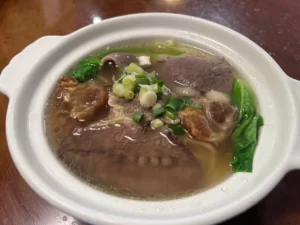
At Halal Chinese Beef Noodles(清真中國牛肉麺食館) in Taipei, the beef stock simmers throughout the day. Diners choose between a clear broth and a red-braised version flavored with herbs and spices. Both fall under the heading of beef noodle soup; the choice between them is part of the attraction.
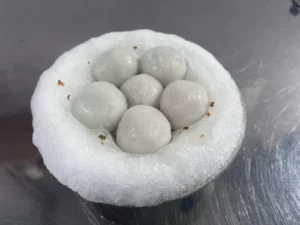
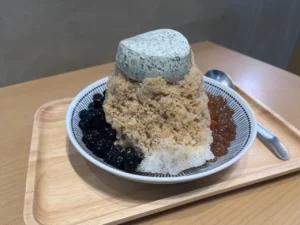
Then there is Yu Pin Yuan Iced and Hot Tangyuan(御品元冰火湯圓), whose signature dessert pairs hot, filled glutinous rice balls with shaved ice. The Taipei night-market business received a Michelin Bib Gourmand in 2019. Its founders devised the combination to give customers a reason to eat the warming rice balls during summer. Temperature became as much a part of the dish as sweetness or texture.
Chun Mei Ice Shop(春美冰菓室) specializes in Taiwanese desserts including shaved ice, almond jelly and douhua, a soft tofu pudding. YU CHOCOLATIER(ユー ショコラティエ) rounds out the Taiwanese arrivals. The latter approaches local ingredients through French chocolate making, drawing on Taiwan’s teas, tropical fruits and other flavors. It offers another way to encounter a place through something small enough to finish in a few bites.

The two Thai arrivals offer different approaches to noodles.
Pad Thai Fai Ta Lu(パッタイファイタル), associated with chef Andy Yang, has made wok cooking its specialty. At its Phra Nakhon restaurant in Bangkok, Michelin highlights pad Thai topped with char-grilled pork loin and a version cooked with fresh prawns. A widely familiar dish becomes a reason to seek out a particular kitchen.

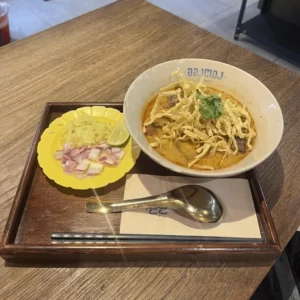
Ong Tong Khao Soi(オントンカオソーイ) brings a northern Thai specialty to the lineup. Founded by brothers from Chiang Mai using their grandmother’s recipe, the Bangkok business serves khao soi: egg noodles in a coconut-milk curry broth, topped with fried noodles. The combination gives each bowl two textures, with the crisp noodles gradually softening into the soup.
TABISIA’s shops will be accessible to visitors who are not flying, making the complex a potential destination for Fukuoka residents as well as passengers.
The setting gives the project a significance beyond the expanded choice of lunch. Close to the Korean Peninsula and mainland China, Fukuoka has been shaped by centuries of exchange with its Asian neighbors. Hakata’s port flourished through trade across those waters; people, goods and cultural influences arrived together.
For a visitor, leaving room for those connections is part of understanding the city. An itinerary devoted entirely to Japanese food would miss some of what Fukuoka’s position in Asia makes possible. A gathering of Taiwanese and Thai specialists at its airport seems a fitting continuation of that history.
For trips from summer 2027 onward, the airport deserves a longer entry in the itinerary. Allow time to sit down, order something unfamiliar and perhaps reconsider whether there is room for dessert.