Into konbini life—and MORE, MORE Japan.
Launching October 2026

Dole’s collaboration with Tokyo’s Omiya Yogashiten returns with dragon fruit, a wider rollout and another limited run.
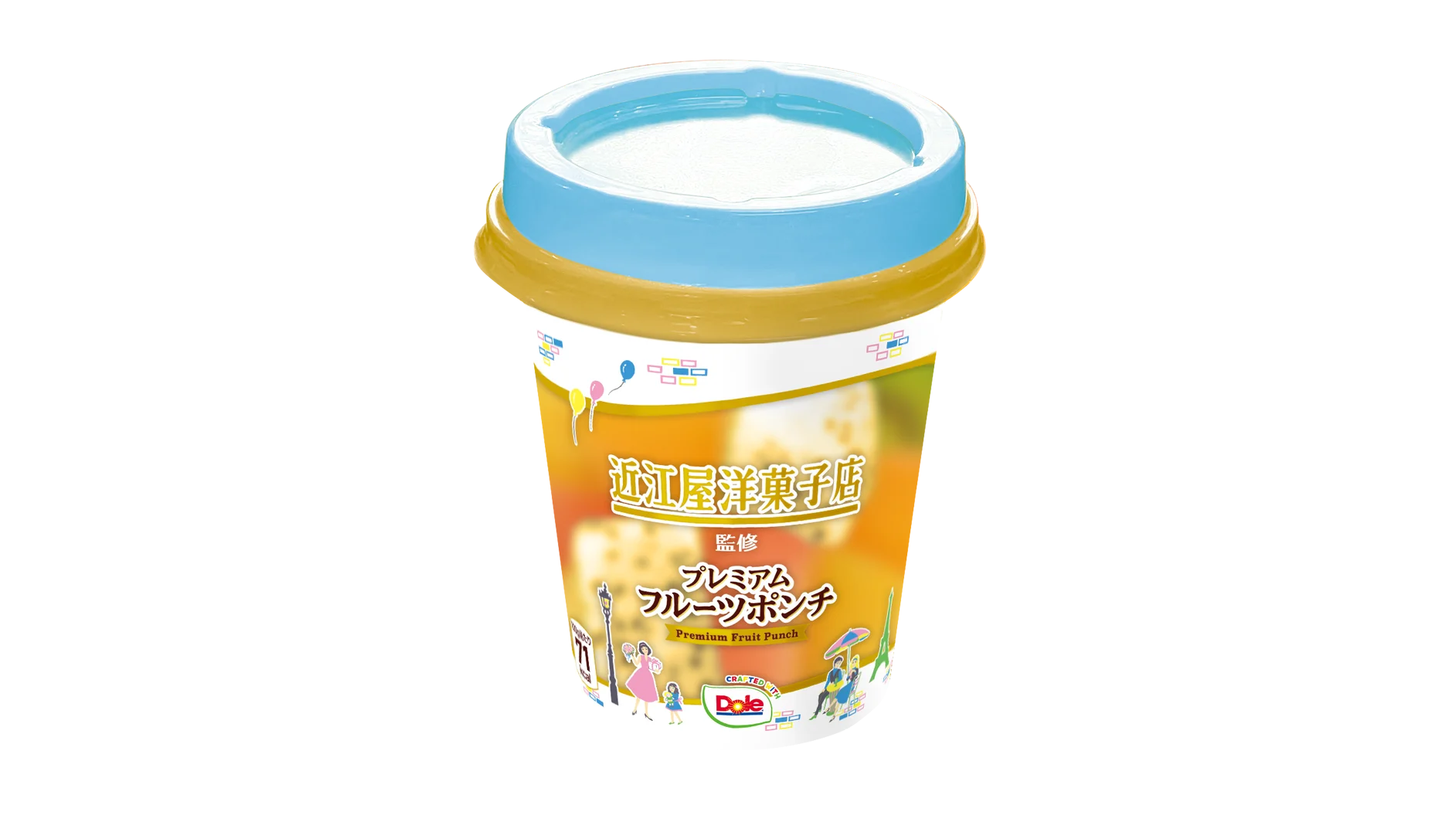
One of last year’s sought-after konbini desserts is getting another run. Dole’s Premium Fruit Ponch, developed with the historic Tokyo confectionery shop Omiya Yogashiten, returns to select 7-Eleven stores beginning Tuesday, October 20, 2026.
The inspiration is Omiya’s signature bottled fruit ponch: cut fruit packed into glass and suspended in syrup. Dole’s version, Premium Fruit Ponch — Developed with Omiya Yogashiten (近江屋洋菓子店監修 プレミアムフルーツポンチ), brings that idea to a ready-to-eat cup.
This edition contains pineapple, orange, kiwi, pink grapefruit and a new addition, dragon fruit. The syrup is made to reproduce the flavor of Omiya’s own recipe. A 300g cup has a suggested retail price of ¥698, including tax, and will be available while supplies last.
The collaboration made its debut at select Tokyo 7-Eleven stores on Saturday, September 20, 2025. The original cup contained 320g and sold for ¥598.32, including tax. Illustrations drawn from Omiya’s wrapping paper gave the packaging a connection to the shop that went beyond its name.
It proved difficult to keep on shelves. According to Dole, the dessert drew widespread attention on social media, and many stores sold out soon after its release.
The latest version will reach a wider sales area, though Dole has not named the participating regions or stores. It remains a limited release, with availability varying by location.
Omiya Yogashiten (近江屋洋菓子店) is a confectionery shop in Kanda-Awajicho, in Tokyo’s Chiyoda City, with a history dating to 1884. Classic cakes and seasonal fruit desserts are its staples. Its bottled fruit ponch is a signature product, bought as a gift or brought to the table for a gathering.
Its beginnings were more practical than sweet. In an interview published by Dole, fifth-generation owner Yoshiaki Yoshida describes a family business that started as a charcoal shop in Hongo, became a bakery and, over successive generations, turned toward Western-style confectionery. The present Kanda building dates to 1966.
The shop’s approach has remained straightforward: good ingredients at prices that make them accessible. Fruit is selected for the dessert it will become. In fruit ponch, Yoshida explains, sweetness alone is not enough; each fruit must sit comfortably alongside the others.
The bottled specialty began with something his sister made at home. His predecessor saw the fruit ponch she kept in the refrigerator and recognized its potential as a product. The arrangement of fruit inside the glass was developed by a production manager with an art-school background. That visual language has endured: the bottle is both a container and a display.
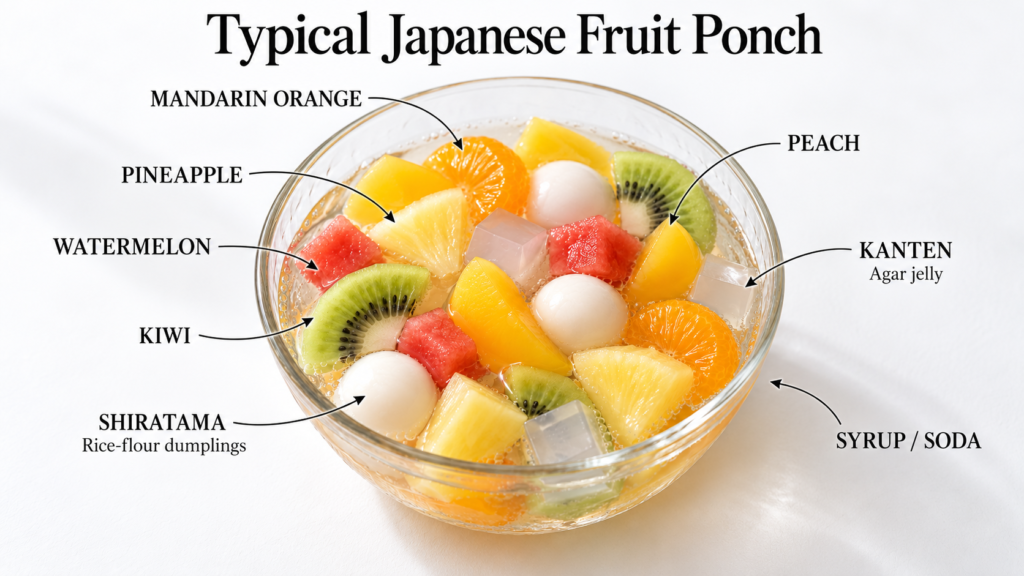
Japanese fruit ponch (フルーツポンチ) is a dessert of cut fruit in syrup or another sweet liquid, sometimes a carbonated soft drink. Depending on the recipe, it may include canned fruit, agar jelly or shiratama, chewy rice-flour dumplings. It is typically eaten with a spoon.
It belongs to a long history of Western-style sweets finding new forms in Japan. Sembikiya’s official history places fruit punch among the offerings associated with its “fruit dining room,” opened in 1868, which helped establish the Japanese fruit-parlor tradition.
At Omiya, fresh fruit and syrup are the focus. The Dole collaboration translates that combination into a cup small enough to pick up on an ordinary convenience-store visit.
The name points back to punch, an alcoholic drink traditionally made in a large bowl and ladled into individual cups. Familiar in both Britain and America, these shared drinks combined spirits, citrus, sugar and water, often with spices and pieces of fruit. The Japanese dessert shares the same basic combination of fruit and sweetened liquid, with the emphasis shifted from drinking to eating.
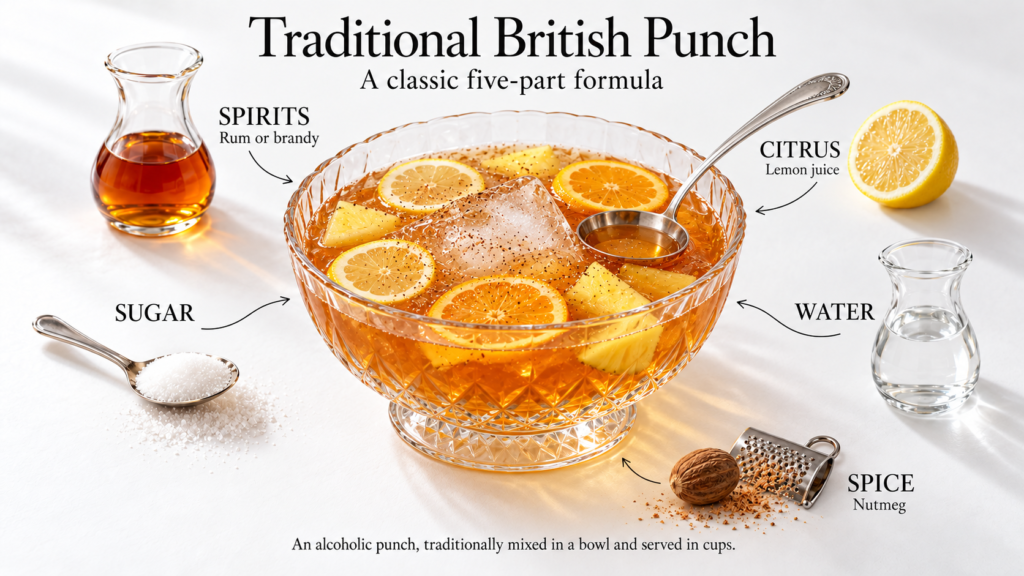
The English word punch is traditionally linked to Hindi panch, meaning “five,” a reference to five ingredients: spirits, citrus juice, sugar, water and spice. The explanation is widely repeated, although the word’s precise origins remain disputed. The five fruits in Dole’s cup are a coincidence, rather than a requirement of the recipe.
The drinking tradition lives on. Punch Room, EDITION’s cocktail-bar concept, puts punch at the center of its menus, with locations including London and Tokyo. At its Ginza bar, punches are served by the glass or in silver bowls with ladles for sharing.
The name has another life in American soft drinks. Hawaiian Punch, known for its red fruit-flavored drink, illustrates how punch can also mean a sweet, nonalcoholic beverage. The brand introduced a ready-to-serve canned version in 1950 and became a national brand in 1955.

Japanese borrowed the name as ponchi (ポンチ), also rendered panchi (パンチ). In the Japanese dessert, the balance shifted: fruit became the main attraction, while alcohol was reduced to a flavoring or omitted altogether. The liquid now accompanied the fruit, rather than the other way around. Omiya’s bottled fruit ponch belongs to that fruit-centered tradition—a dessert to eat with a spoon.